
Contact Barrenjoey Inspections:
EXCELLENTTrustindex verifies that the original source of the review is Google. Marc was efficient and extremely thorough at a time we really needed his professional advice. His communication is outstanding and we highly recommend him.Posted on GoogleTrustindex verifies that the original source of the review is Google. Marc provided a very comprehensive building report, and was a pleasure to work with. He was responded to our enquiry immediately and was available at short notice.Posted on GoogleTrustindex verifies that the original source of the review is Google. I highly recommend Marc for anyone looking for a building and pest report. He was responsive, thorough in his review of the property, helpful with my queries and easy to do business with.Posted on GoogleTrustindex verifies that the original source of the review is Google. Marc is extremely thorough and meticulous. I have used many other Property inspectors in the past and none of them have come anywhere close to the level of detailed reports that Mark provide. He is the gold standard for property inspectors. So pleased I engaged his services on several occasions. I will recommend him to everyone. Dave.Posted on GoogleTrustindex verifies that the original source of the review is Google. Marc performed a building and pest inspection for an apartment ahead of a purchase. Quick turnaround for a thorough report that was clear to understandPosted on GoogleTrustindex verifies that the original source of the review is Google. Marc was able to accomodate me quickly and was very thorough and knowledgeable. I highly recommend Marc for your next house/pest inspection.Posted on GoogleTrustindex verifies that the original source of the review is Google. I was very impressed by the professional and friendly service from Barrenjoey Inspections. Marc is knowledgeable and has great attention to detail. The report is thorough and easy to follow, providing confidence for the most significant purchase, our new home.Verified by TrustindexTrustindex verified badge is the Universal Symbol of Trust. Only the greatest companies can get the verified badge who has a review score above 4.5, based on customer reviews over the past 12 months. Read more
Professional Building Inspection Services Across All Sydney Regions
Some buyers don’t need a combined building and pest report. You might already have a separate timber pest inspection arranged, be purchasing a newer property with low pest risk, or simply want a standalone structural assessment. A buyer building inspection gives you that focused, independent picture of the property’s structural condition, without paying for a service you don’t need.
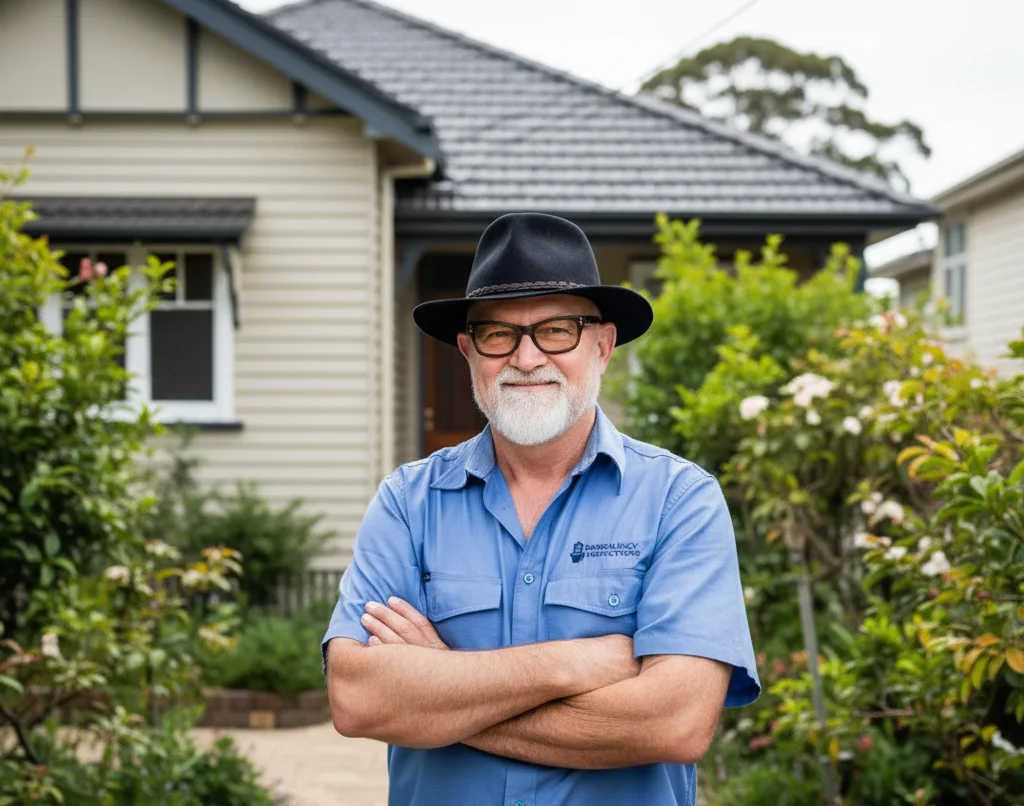
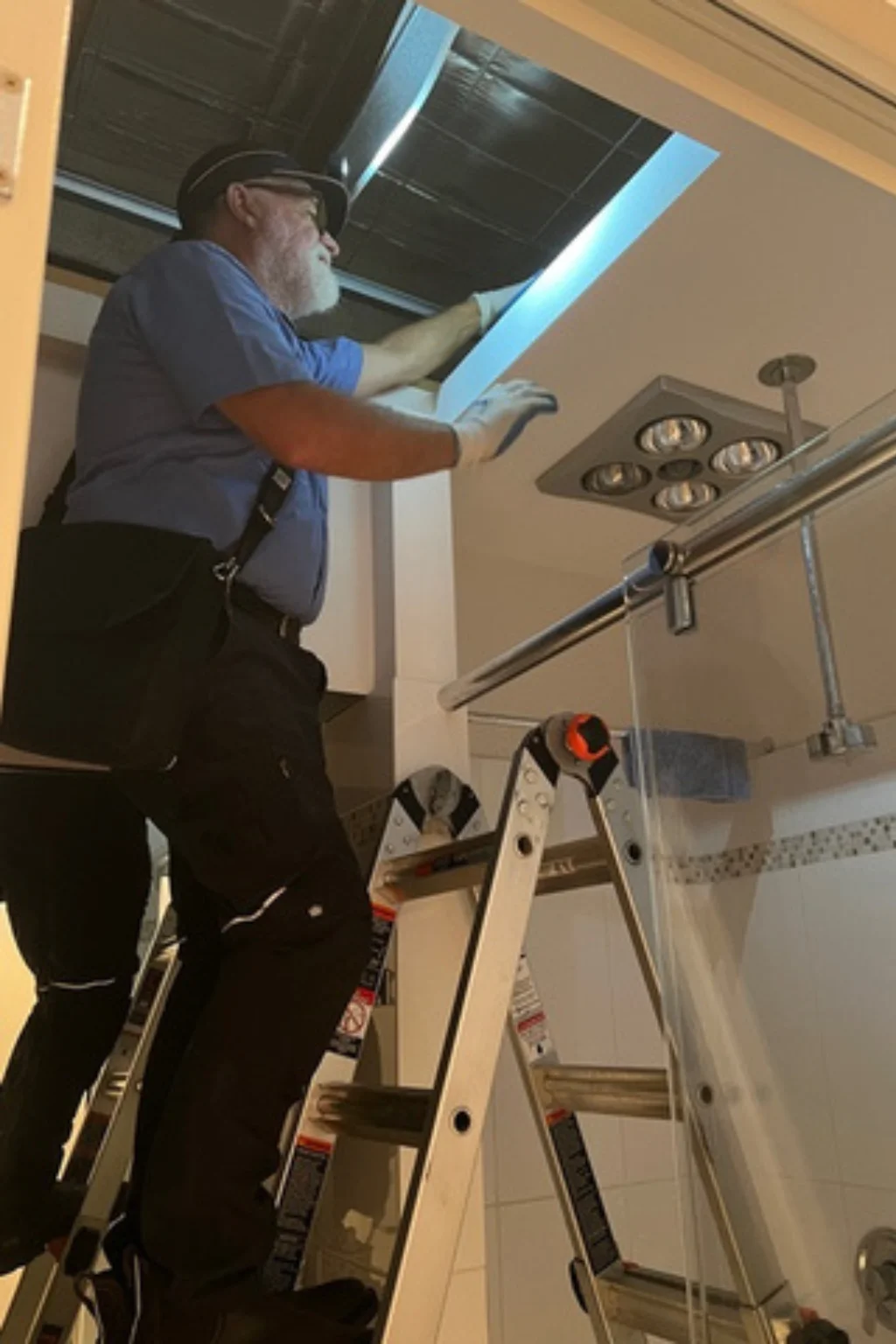
At Barrenjoey Inspections, every buyer building inspection is conducted personally by Marc Hanley, a licensed builder with over 30 years of hands-on construction experience across Sydney and the Northern Beaches.
Marc assesses the structural condition of the property with the same thoroughness as our combined inspections, covering everything except timber pest activity. You still get his full construction knowledge applied to every visible defect, safety concern, and maintenance issue.
✔ Licensed builder with 30+ years of construction experience
✔ Thorough visual inspection conducted to Australian Standard AS4349
✔ Detailed photographic report delivered within 24 hours
✔ 100% independent, no conflicts of interest
A buyer building inspection is a thorough visual assessment of a property’s structural and general condition, carried out before you commit to purchase. It covers the same structural, interior, exterior, and safety elements as our combined inspection, but does not include a timber pest assessment.
This service suits buyers who are arranging a separate timber pest inspection, who are purchasing a property type or location with lower pest risk, or who specifically want a building-only report for their own reasons. If you’re purchasing on the Northern Beaches, we’ll always flag if a combined inspection would serve you better given the area’s termite risk, but the choice is yours.
Our buyer building inspection is a thorough visual assessment of all safely accessible areas of the property’s structure and condition. We follow the same systematic approach as our combined inspections, minus the timber pest component.
The structural inspection covers the primary load-bearing elements of the building including:
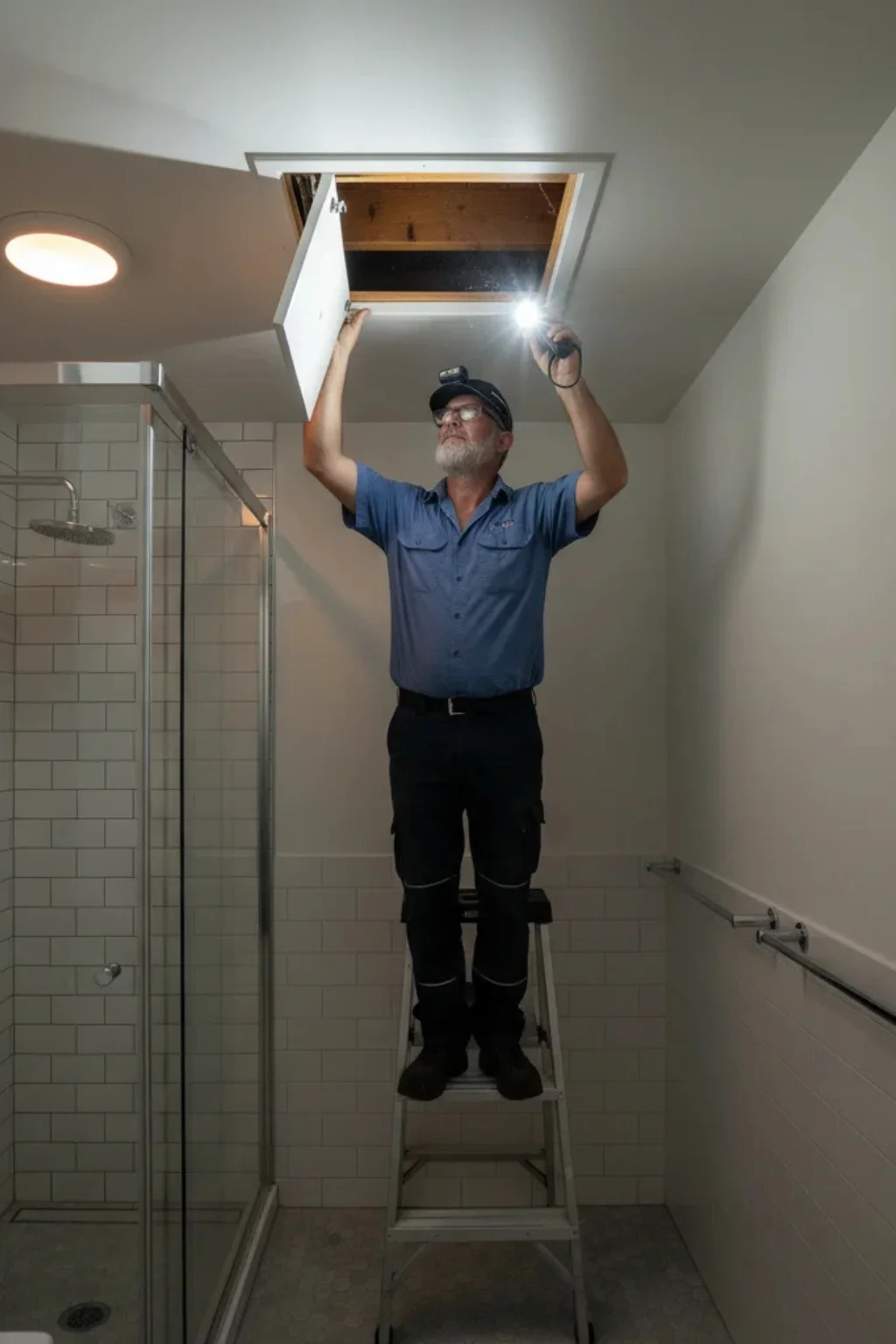
1. Roof framing and roof void where safely accessible
2. External roof covering, guttering, and drainage
3. External walls, cladding, and surface finishes
4. Internal walls, ceilings, and floor surfaces
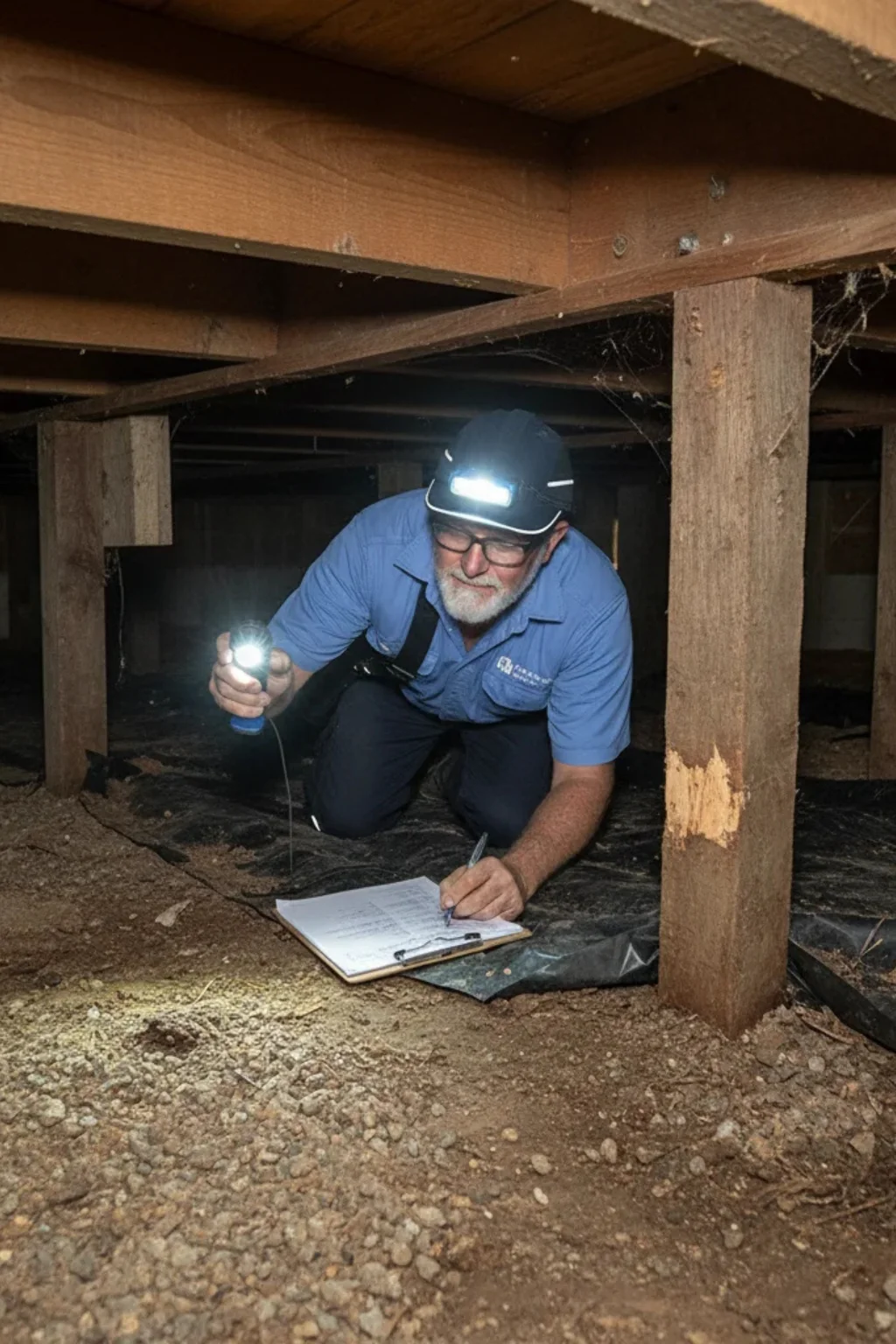
5. Foundations and subfloor areas where safely accessible
6. Structural beams, columns, and connections
Within the property interior we assess:
1. All internal rooms and living areas
2. Wet areas including bathrooms, laundry, and kitchen surrounds
3. Windows, doors, and associated hardware
4. Stairways and balustrades
5. Visible plumbing and drainage fixtures
6. Ventilation across all rooms
Around the exterior of the property we examine:
1. External wall condition and surface finishes
2. Damp proof course condition
3. Driveways, paths, and external steps
4. Garages, carports, and outbuildings within the property boundary
5. Drainage and stormwater connections
6. Fencing and retaining walls
We identify and document visible safety hazards across all assessed areas, including structural risks, fall hazards, and conditions that present an immediate concern for occupants.
All inspections are conducted in line with Australian Standard AS4349. Areas that cannot be safely or reasonably accessed at the time of inspection are clearly noted in the report along with the associated risk this creates.
It’s important to understand the scope of this inspection so you can decide if it’s the right fit, or whether our combined building and pest inspection suits you better.
A buyer building inspection does not cover:
1. Timber pest activity — this requires a separate timber pest inspection or our combined building and pest inspection
2. Electrical systems, wiring, and switchboards —a licensed electrician is required for electrical assessment
3. Plumbing internal to walls or underground — a licensed plumber is required for invasive plumbing assessment
4. Asbestos identification — a qualified assessor is required for asbestos surveys
If you’re purchasing on the Northern Beaches and haven’t already arranged a separate timber pest inspection, we recommend our combined building and pest inspection instead. The area sits in a high-risk zone for termite activity, and timber pest damage won’t be captured in a structural inspection alone.
Step 1 — Book Your Inspection
Contact us by phone or through the online quote form. We’ll confirm the property address, inspection type, and your preferred date. We liaise directly with the real estate agent to arrange access so you don’t have to.
Step 2 — On-Site Inspection
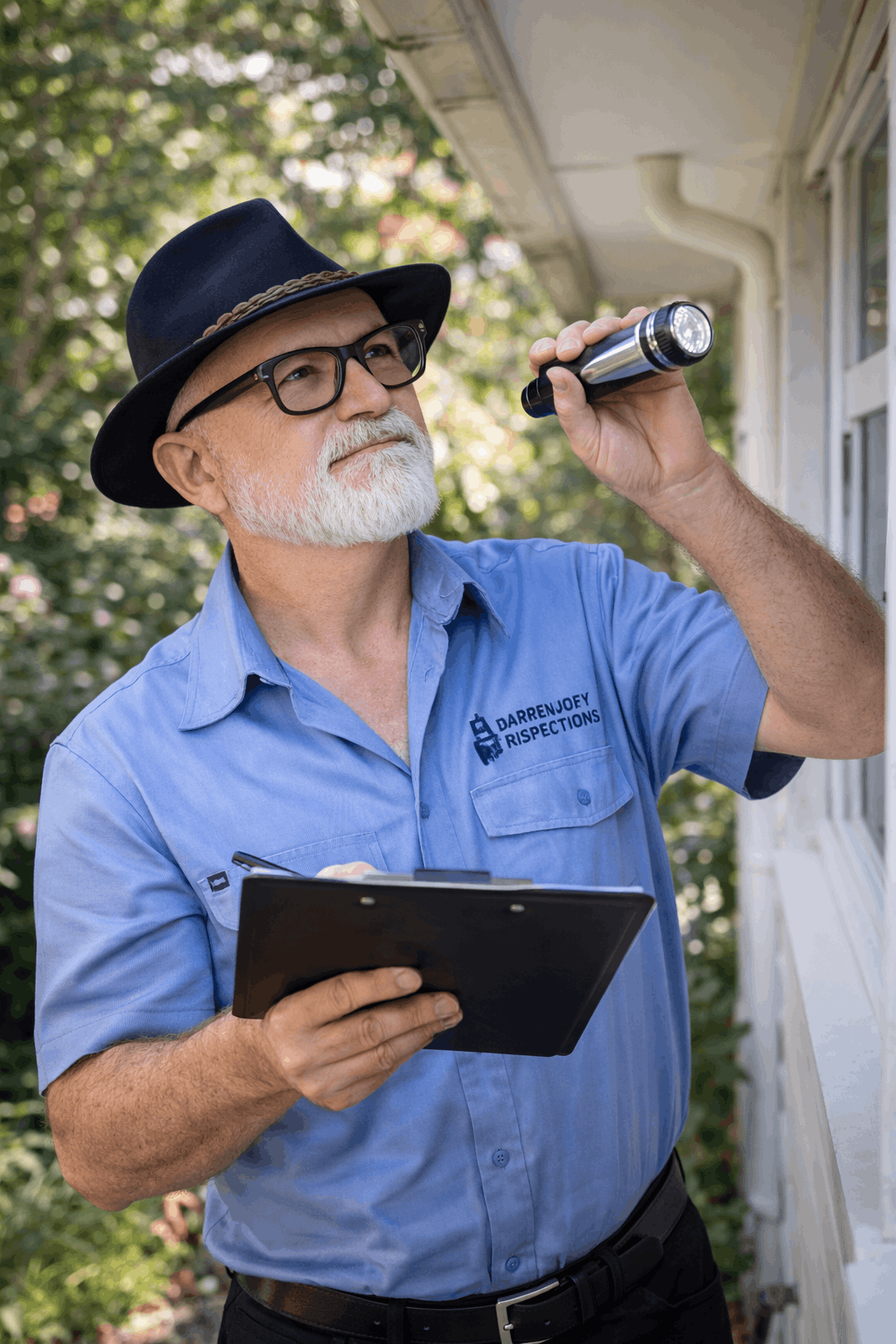
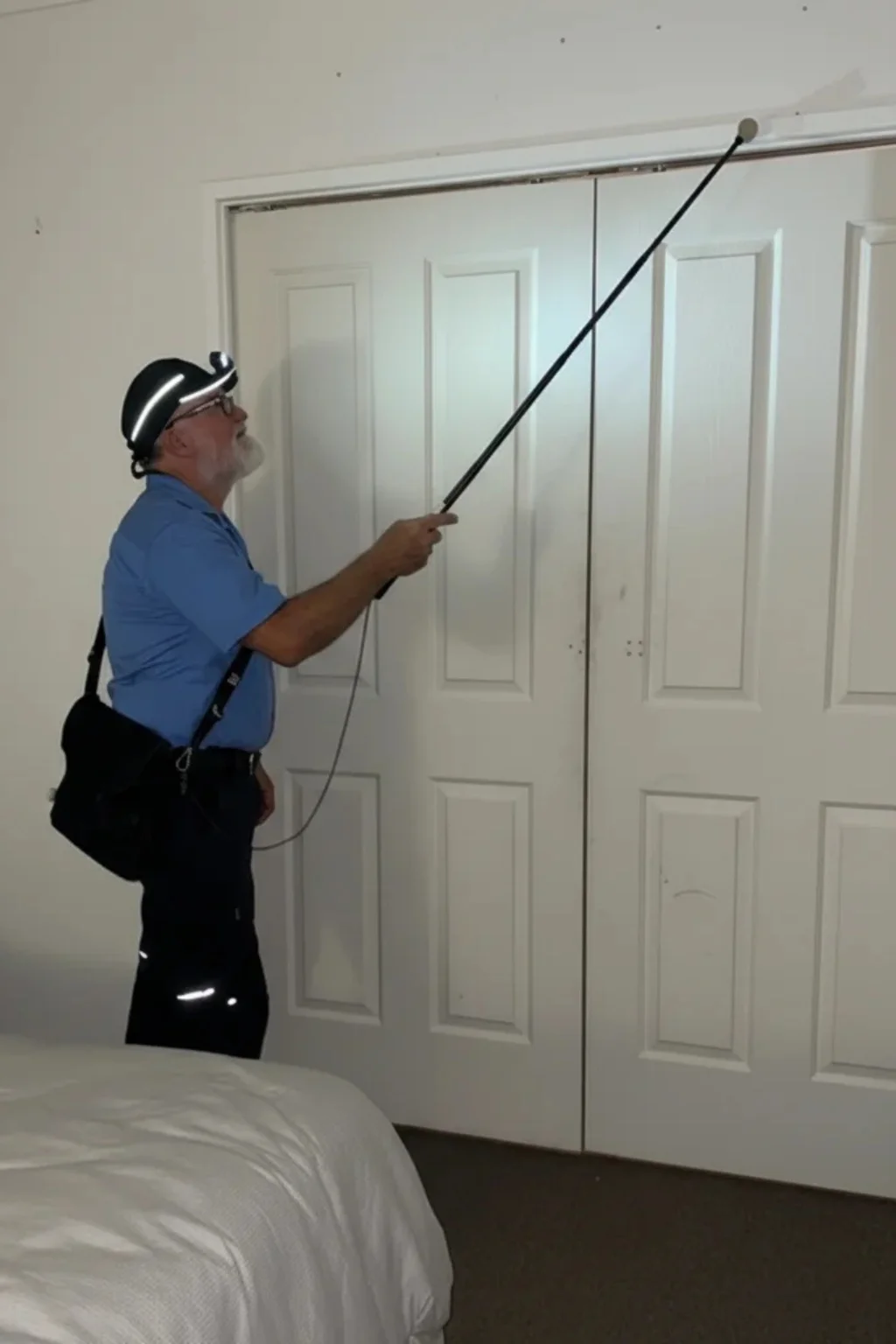
Marc arrives at the property and carries out a thorough visual inspection of all safely accessible structural and general condition areas. Most inspections take between one and two hours depending on the property size and age.
Step 3 — Report Delivered Within 24 Hours
Your detailed photographic report is delivered to your inbox within 24 hours of the inspection, with clear findings, plain English descriptions, and severity ratings for each issue.
Step 4 — Follow-Up Phone Call
Marc is available for a follow-up call to walk you through the key findings, answer your questions, and help you understand what the report means for your decision.
Your report is designed to be read and understood by a property buyer, not just a building professional. Every significant finding is documented with photographs and a clear written explanation.
Each report includes:
1. An overall summary of the property’s structural and general condition
2. A breakdown of major defects requiring prompt attention
3. Minor defects and general maintenance items
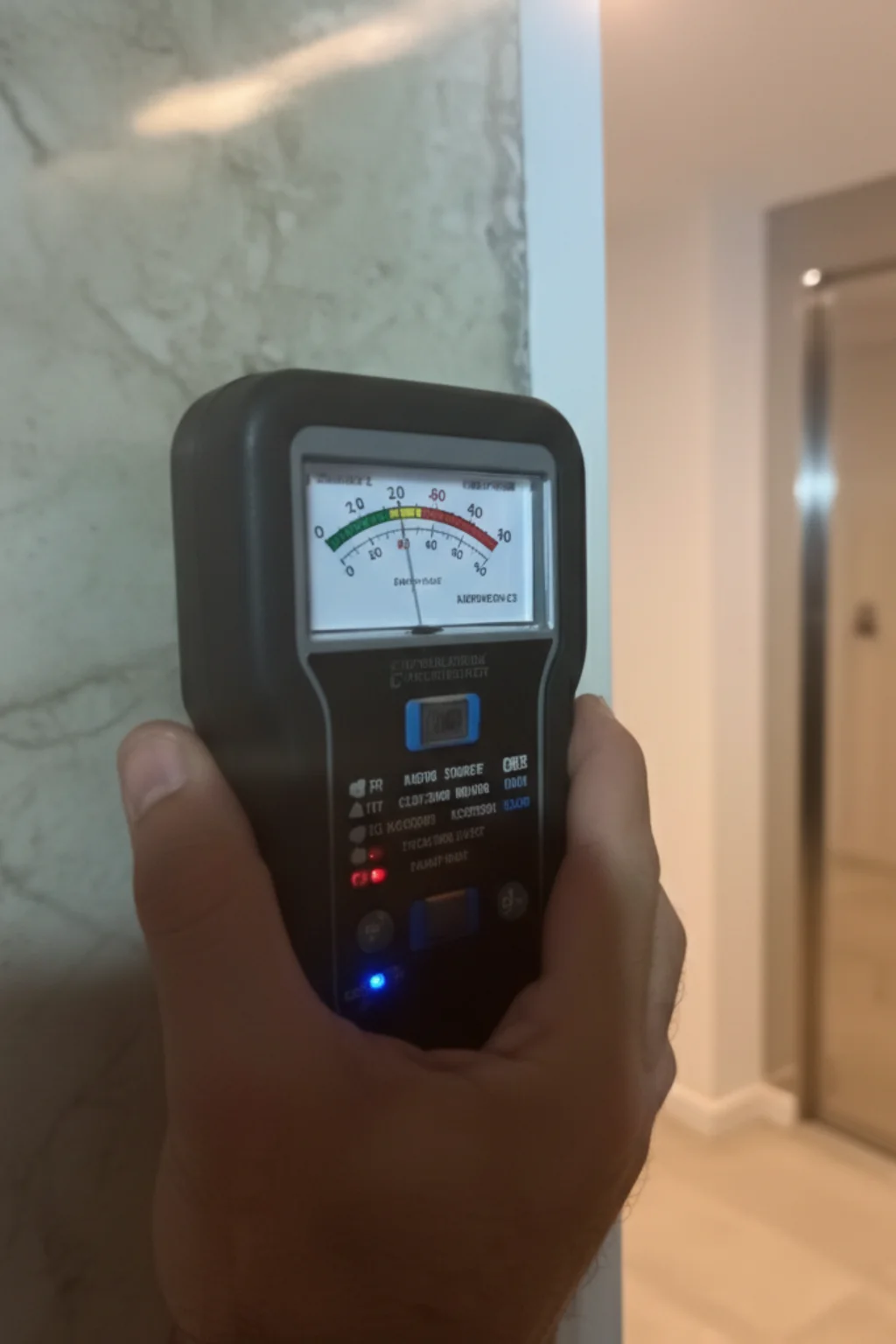
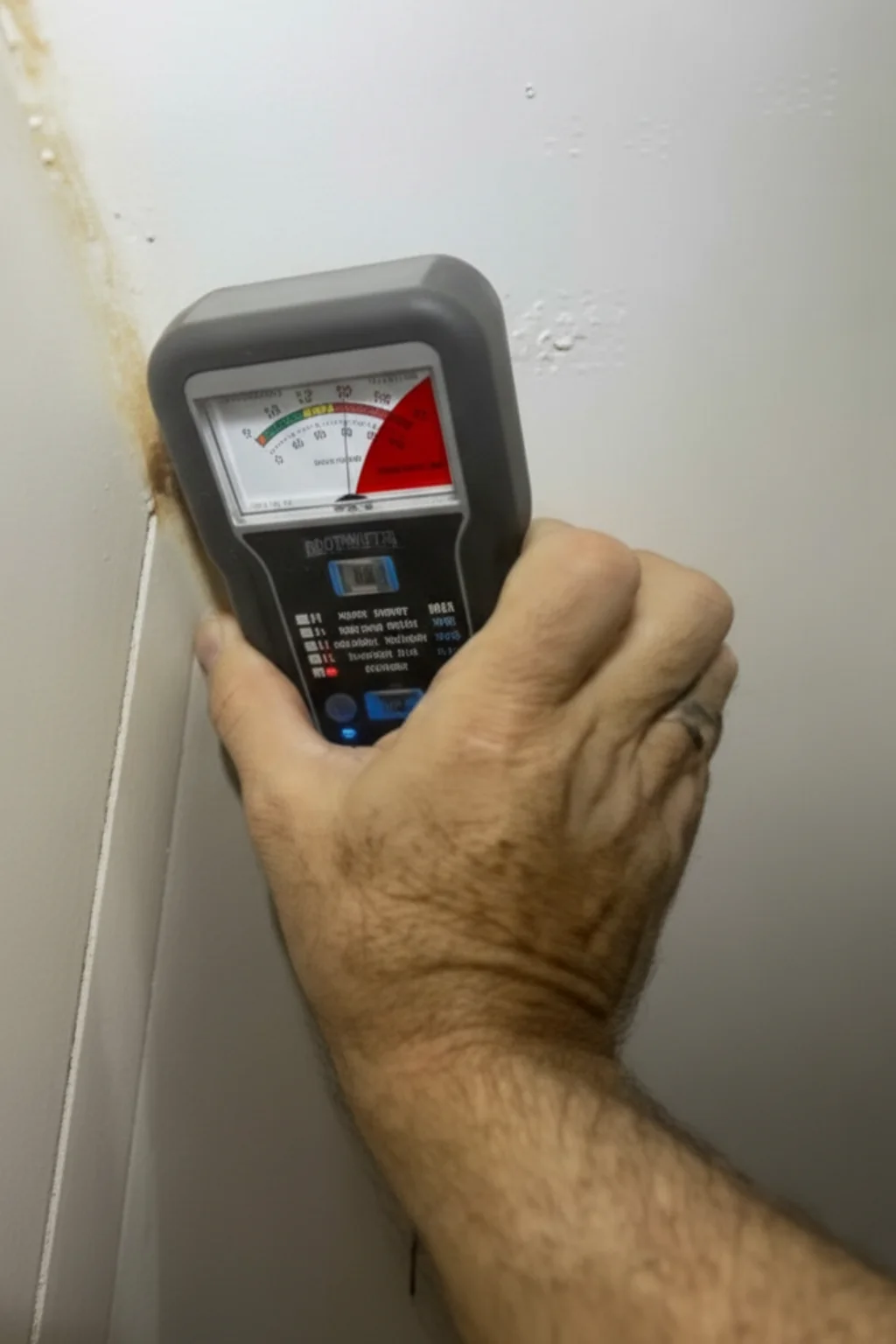
4. Moisture readings for risk areas including bathrooms, laundry, and subfloor
5. Photographic evidence for every significant finding
6. Plain English explanations of what each finding means
7. Notes on any areas that could not be accessed at the time of inspection
8. Guidance on the relative severity and priority of findings
The report is delivered as a digital document you can share directly with your solicitor, buyers agent, or use as the basis for purchase negotiations. It’s compliant with Australian Standard AS4349.
Not all building inspectors have the same level of experience or qualifications. In NSW, the requirements to become a registered building inspector are less demanding than many buyers realise.
Choosing a licensed builder with extensive construction experience is a meaningful step up in the quality of your inspection.
Marc Hanley is a licensed builder, not just a registered inspector. Here is what that means for you:
He understands construction methods across all periods of Sydney housing, including federation, post war, brick veneer, and modern builds
He recognises how defects develop over time and what typically causes them
He can assess the likely repair cost and practical implications of each finding
He identifies conditions that are likely to lead to future problems, not just existing damage
He understands what is normal for a property of that age and type versus what represents a genuine risk
He communicates findings in clear, plain language that you can understand and act on
When you book a pre-purchase building inspection with Barrenjoey Inspections, you get the assessment of someone who has spent more than 30 years building, renovating, and assessing properties across Sydney.
That depth of experience shows in the quality of what gets found and how it gets explained.

Every property is different, but certain issues appear regularly across Sydney and the Northern Beaches. Here are the most common defects identified during pre-purchase building inspections in this area.
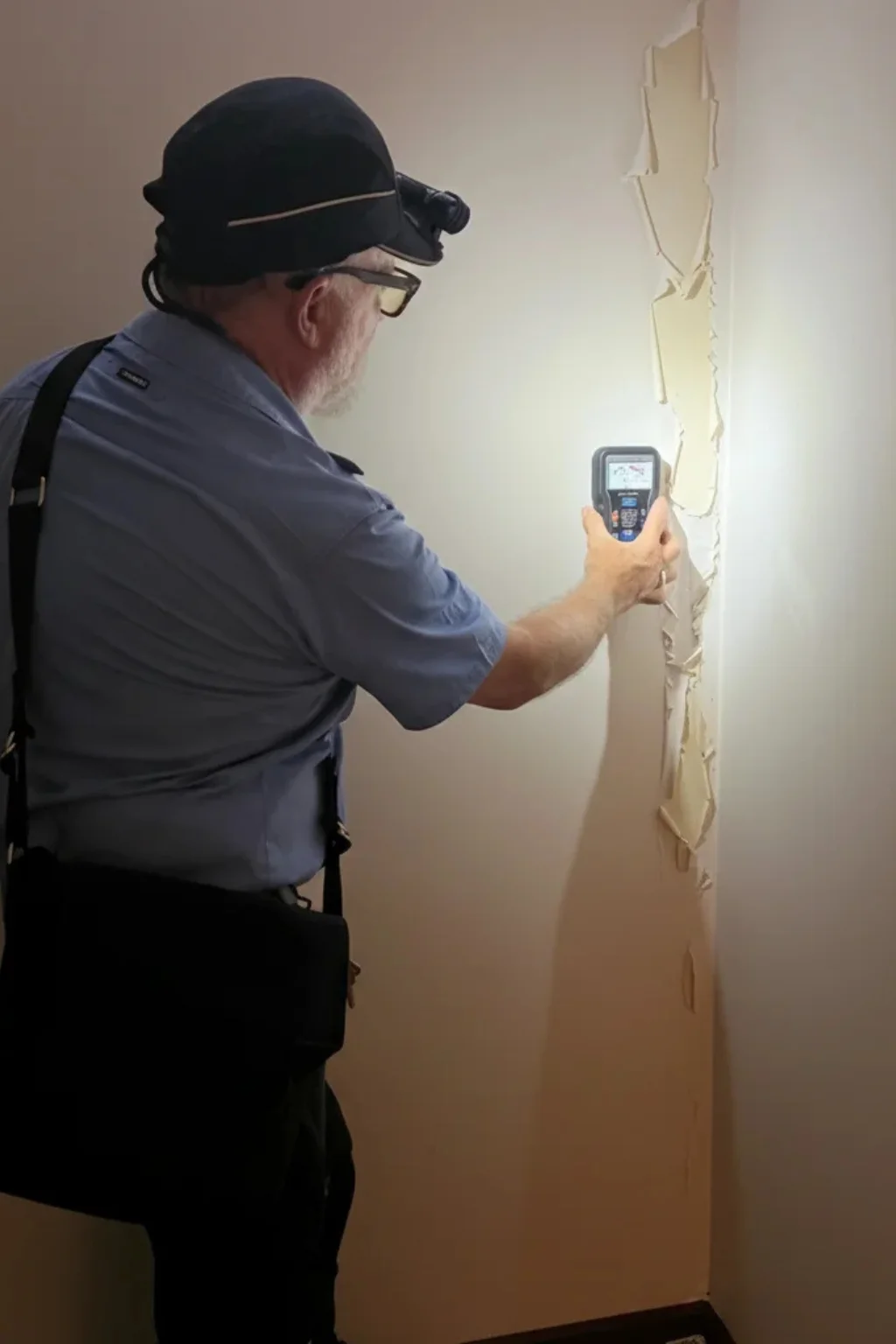
Rising damp and moisture ingress Moisture moving through walls and subfloor areas is one of the most common issues in older Sydney properties. Coastal humidity on the Northern Beaches accelerates moisture problems in brick and concrete construction. Left unaddressed, rising damp leads to structural deterioration, timber decay, and health concerns.
Roof defects and deterioration Older terracotta and fibrous cement roofing shows significant wear in coastal environments. Cracked or broken tiles, corroded ridging, and failed pointing allow water entry into the roof void and ceiling space. Guttering corrosion and poorly connected downpipes are also regularly identified.
Structural cracking Cracking in walls and ceilings ranges from cosmetic movement cracking to active structural cracking indicating foundation movement. The pattern, width, and location of cracking determines whether it is a maintenance issue or a structural concern. This distinction requires an experienced eye to make correctly.
Subfloor deterioration In older timber-framed properties, subfloor areas frequently show evidence of deteriorating stumps, inadequate ventilation, moisture accumulation, and in many cases timber pest activity. Subfloor conditions are often invisible from the interior of the property.
Salt-air corrosion Properties close to the water on the Northern Beaches show accelerated corrosion of metal roofing, structural connectors, guttering, and external fixings. Salt-air corrosion can affect structural integrity over time if not identified and managed.
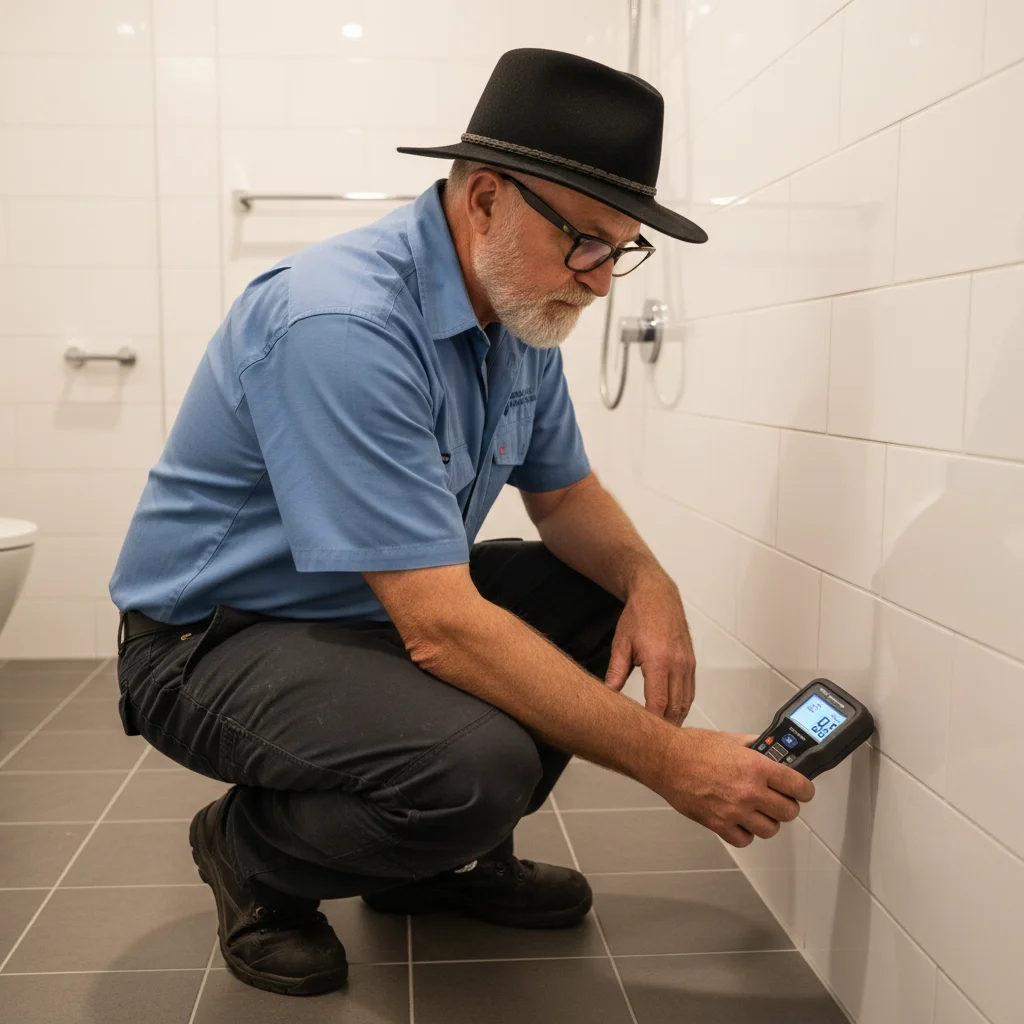
Shower and wet area leaks Leaking showers are one of the most frequently identified defects in Sydney properties. Failed waterproofing in shower recesses allows water to penetrate into wall cavities and subfloor areas, often without any visible sign on the tile surface. Moisture meters identify these issues where visual inspection alone would not.
Safety hazards Inadequate balustrade heights, unsafe stair construction, missing or inadequate smoke alarms, and other visible safety concerns are documented as part of every inspection.
We carry out pre-purchase building inspections across Sydney, with a primary focus on the Northern Beaches and North Shore. Our local knowledge of these areas, their building styles, and their specific risk factors is a genuine advantage for buyers purchasing in this market.
Northern Beaches Manly, Dee Why, Collaroy, Mona Vale, Avalon, Newport, Narrabeen, Freshwater, Palm Beach, Warriewood, Brookvale, Seaforth, Balgowlah, Curl Curl, Fairlight, Beacon Hill, Cromer, Allambie Heights, Whale Beach
North Shore Mosman, Neutral Bay, Cremorne, North Sydney, Willoughby, Chatswood, Lane Cove, Crows Nest, Kirribilli
Not sure if we cover your suburb? Call Marc directly for a quick answer.

EXCELLENTTrustindex verifies that the original source of the review is Google. Marc was efficient and extremely thorough at a time we really needed his professional advice. His communication is outstanding and we highly recommend him.Posted on GoogleTrustindex verifies that the original source of the review is Google. Marc provided a very comprehensive building report, and was a pleasure to work with. He was responded to our enquiry immediately and was available at short notice.Posted on GoogleTrustindex verifies that the original source of the review is Google. I highly recommend Marc for anyone looking for a building and pest report. He was responsive, thorough in his review of the property, helpful with my queries and easy to do business with.Posted on GoogleTrustindex verifies that the original source of the review is Google. Marc is extremely thorough and meticulous. I have used many other Property inspectors in the past and none of them have come anywhere close to the level of detailed reports that Mark provide. He is the gold standard for property inspectors. So pleased I engaged his services on several occasions. I will recommend him to everyone. Dave.Posted on GoogleTrustindex verifies that the original source of the review is Google. Marc performed a building and pest inspection for an apartment ahead of a purchase. Quick turnaround for a thorough report that was clear to understandPosted on GoogleTrustindex verifies that the original source of the review is Google. Marc was able to accomodate me quickly and was very thorough and knowledgeable. I highly recommend Marc for your next house/pest inspection.Posted on GoogleTrustindex verifies that the original source of the review is Google. I was very impressed by the professional and friendly service from Barrenjoey Inspections. Marc is knowledgeable and has great attention to detail. The report is thorough and easy to follow, providing confidence for the most significant purchase, our new home.Verified by TrustindexTrustindex verified badge is the Universal Symbol of Trust. Only the greatest companies can get the verified badge who has a review score above 4.5, based on customer reviews over the past 12 months. Read more
A buyer building inspection covers the structural and general condition of the property only. Our combined inspection adds a full timber pest assessment covering termites, timber decay, and wood borers. If you haven’t arranged a separate pest inspection, the combined service is usually better value and more thorough.
Some buyers have already booked a separate timber pest inspection through another provider, are purchasing a property type with lower pest risk, or specifically want a structural-only report for their own reasons.
Yes. Every buyer building inspection is conducted in line with Australian Standard AS4349, by the same licensed builder, with the same level of detail across all structural, interior, exterior, and safety elements.
Yes, just let us know before your booking is confirmed and we’ll adjust the inspection type and quote accordingly.
Most inspections take between one and two hours for a standard house. Larger or older properties may take longer.
Your detailed photographic report is delivered within 24 hours of the inspection, with a follow-up call available to talk through the findings.