Efflorescence in Brickwork: What Sydney Property Buyers Need to Know

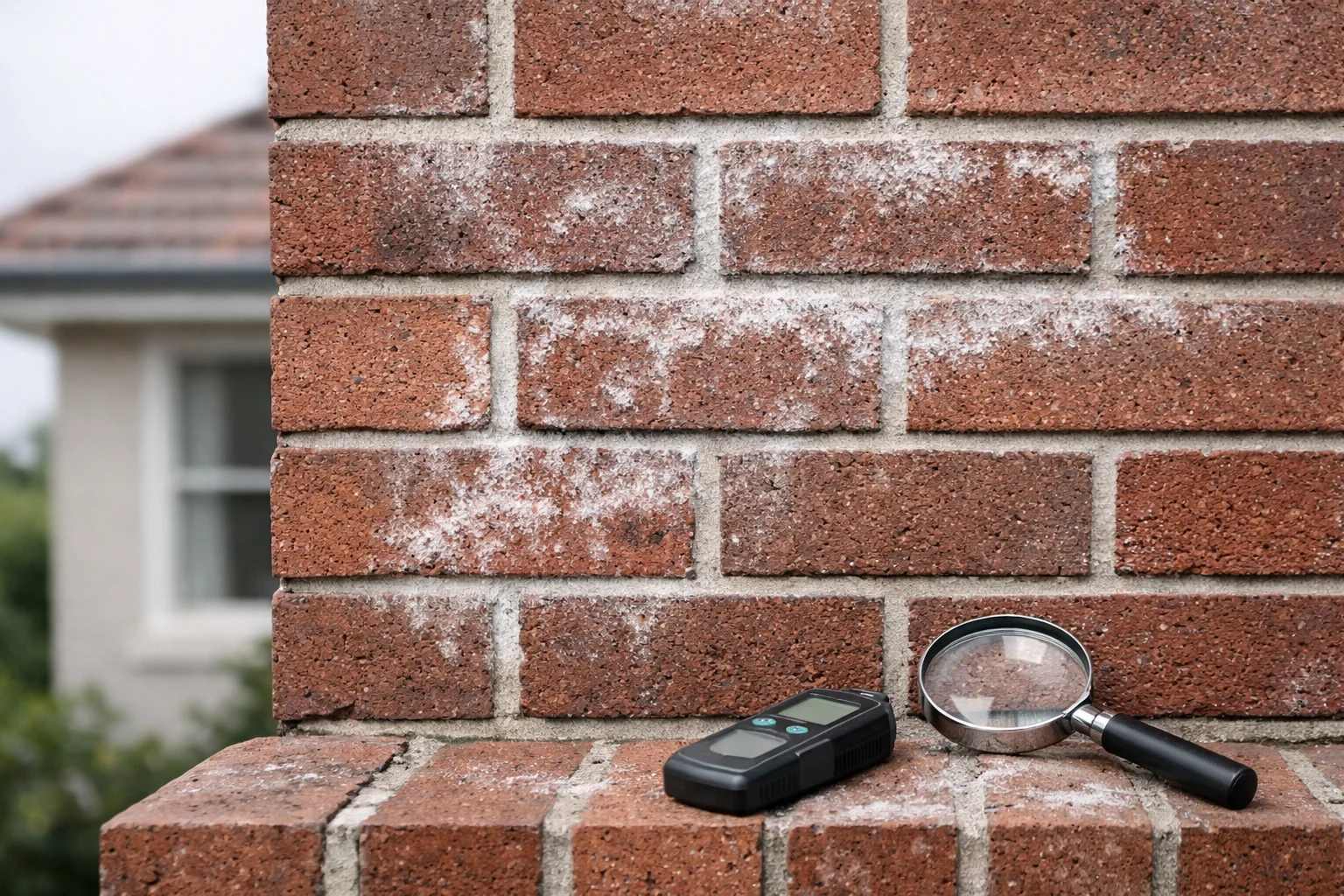
If you have ever noticed white, chalky stains streaking across the brick walls of a property, you have seen efflorescence in brickwork firsthand. It is one of the most common surface conditions found during pre-purchase building inspections across Sydney’s Northern Beaches and North Shore, and it raises an important question for buyers: is it cosmetic, or is it a warning sign of something more serious?

Understanding what efflorescence is, what causes it, and when it matters can make a real difference to your purchasing decision, particularly in a market where properties sell fast and buyers often have limited time to investigate before auction day.

Quick Overview

  • Efflorescence is a white, powdery or crusty deposit that appears on brick and masonry surfaces
  • It is caused by water moving through brickwork and carrying soluble salts to the surface
  • Surface-level efflorescence is often cosmetic, but recurring or severe cases can indicate moisture intrusion, rising damp, or drainage problems
  • Sydney’s coastal climate and older brick construction on the Northern Beaches and North Shore make efflorescence particularly common
  • A thorough visual inspection by a licensed builder can determine whether efflorescence is a minor surface issue or a symptom of a deeper defect
  • Pre-purchase building and pest inspections carried out in line with Australian Standard AS4349 assess brickwork, moisture, and structural condition
  • Buyers should not dismiss white staining on brickwork without having it properly assessed before exchange

What Is Efflorescence in Brickwork?

Efflorescence is the migration of salts to the surface of brick, concrete, or masonry. When water moves through porous brickwork, it dissolves naturally occurring salts within the material. As that water reaches the surface and evaporates, it leaves the salts behind as a white, powdery, or crystalline residue.

The word comes from the French for “to flower out,” which describes how the deposits seem to bloom across the surface of brickwork over time. It can appear as a faint dusty haze, thick white crusts, or streaky staining running down a wall.

Efflorescence can occur on:

  • External brick walls and retaining walls
  • Internal brick or block walls, particularly in basements and subfloors
  • Rendered surfaces where moisture is penetrating the render
  • Concrete foundations, paths, and slabs
  • Mortar joints between bricks

It is important to understand that efflorescence itself is not structurally damaging. The salts do not weaken brickwork. However, the water movement that causes efflorescence very often points to conditions that can cause serious damage over time.

What Causes Efflorescence on Sydney Properties?

Water is the root cause of efflorescence. Without moisture moving through the brickwork, salts cannot migrate to the surface. The real question for property buyers is always: where is the water coming from?

Common causes include:

  • Rising damp: Groundwater moving upward through brickwork from the footings or slab, common in older Sydney homes without effective damp-proof courses
  • Penetrating damp: Rainwater driving through external walls, particularly in exposed coastal locations on the Northern Beaches and North Shore
  • Poor drainage: Water pooling against brickwork due to blocked or poorly graded drainage around the property
  • Roof and gutter defects: Water overflowing or leaking from gutters and running down external walls
  • Plumbing leaks: Slow leaks within walls that saturate brickwork from the inside
  • Condensation: Particularly in subfloor spaces with inadequate ventilation
  • New construction: Freshly laid brickwork naturally contains moisture that dries out over the first one to two years, causing temporary efflorescence that typically resolves on its own

Sydney’s climate adds a layer of complexity. The Northern Beaches and North Shore experience significant rainfall, humidity, and salt-laden coastal air, all of which accelerate moisture movement through older brickwork and increase the likelihood of efflorescence appearing.

Is Efflorescence a Serious Defect?

The answer depends entirely on the source and the severity. Not all efflorescence is equal, and this is exactly why a thorough visual inspection by a qualified professional matters.

Here is a simple way to think about it:

Efflorescence TypeLikely CauseSeverity
Light surface dusting, isolated patchNew construction drying out, minor surface moistureLow, often cosmetic
Recurring after cleaning, same locationOngoing moisture source presentModerate, investigate further
Heavy crusting, wide spread across wallSustained water movement, possible rising dampHigh, professional assessment required
Efflorescence with wall staining or paint bubblingPenetrating damp or internal moistureHigh, likely reportable defect
Efflorescence in subfloor or basementRising damp, drainage failure, plumbing leakHigh, potential structural concern
Efflorescence with mortar deteriorationLong-term water damage to mortar jointsHigh, masonry repair likely required

A once-off light dusting on an exterior wall that has recently been wet may be entirely insignificant. The same visual on a wall that shows signs of dampness inside the property, crumbling mortar, or moisture meter readings above acceptable thresholds tells a very different story.

“We see efflorescence on Northern Beaches properties regularly. The staining itself is not the problem. What matters is finding out where the water is coming from and whether it has already caused damage to the structure, the timberwork, or the waterproofing.” — Marc Hanley, Licensed Builder and Inspector, 30+ years construction experience
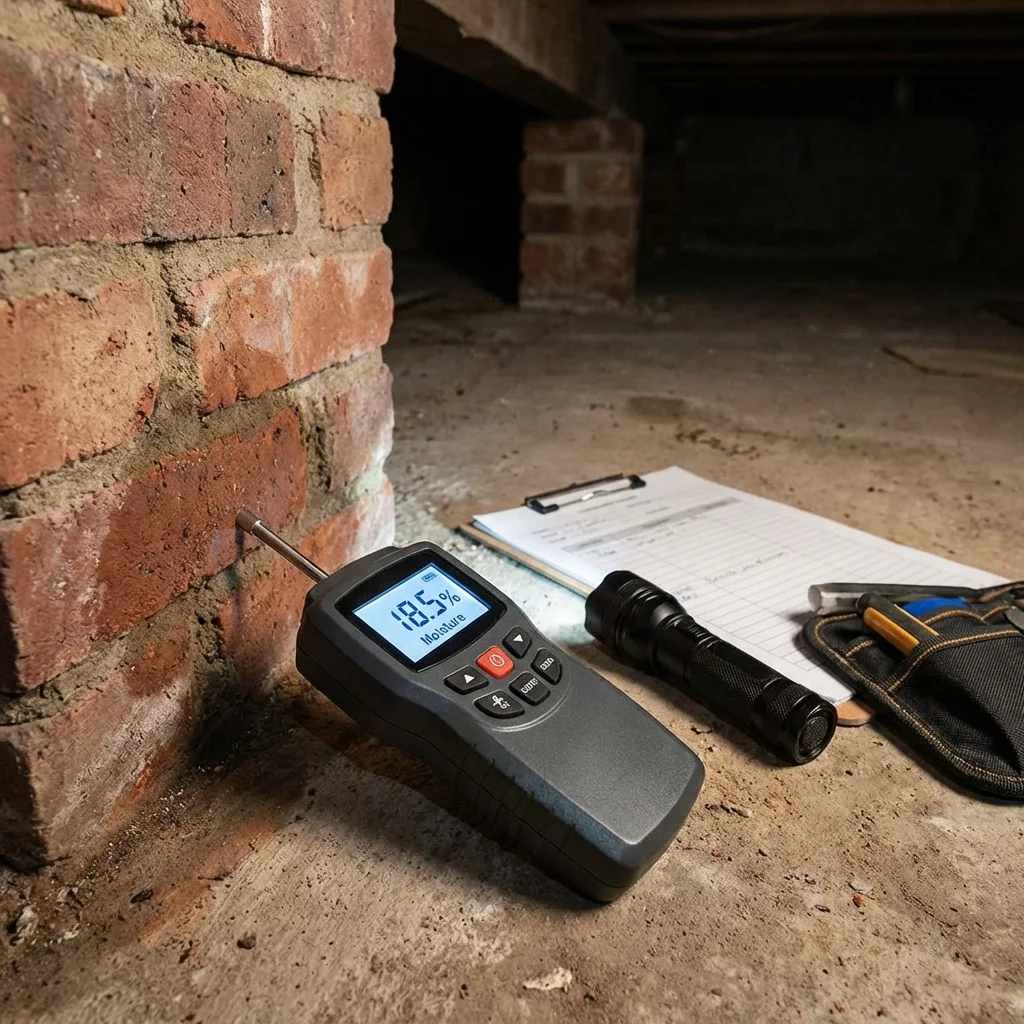
Inspector assessing brickwork or subfloor moisture, professional on-site inspection photo

How a Thorough Visual Inspection Assesses Efflorescence

A pre-purchase building inspection carried out to Australian Standard AS4349.1 assesses the overall condition of the property, including visible brickwork, masonry, and moisture-related defects.

When a licensed building inspector encounters efflorescence during a thorough visual inspection, the assessment goes beyond simply noting the staining. A properly conducted inspection will:

  • Document the location and extent of all efflorescence observed, both internally and externally
  • Use a moisture meter to test wall surfaces for elevated moisture levels behind the visible staining
  • Assess the mortar joints for signs of deterioration caused by ongoing water movement
  • Check subfloor and basement spaces where efflorescence on foundations can indicate rising damp
  • Review drainage patterns around the perimeter of the property
  • Inspect gutters, downpipes, and roof drainage for defects that may be directing water against external walls
  • Look for associated defects including timber decay, corrosion of lintels, and movement in brickwork

The inspection report will classify efflorescence-related findings according to their significance, and the inspector will explain what further investigation or remediation may be required.

Before you exchange contracts on any Sydney property showing brickwork staining, it is worth having an experienced local inspector carry out a thorough assessment. Visit barrenjoeyinspections.com.au to arrange a pre-purchase building and pest inspection.

What Happens During a Pre-Purchase Building and Pest Inspection?

Your step-by-step guide from booking to report, Northern Beaches and North Shore

1
📅

Booking the Inspection

Contact the inspection service as early as possible, especially if the property is going to auction. Inspections are typically arranged within 24 to 48 hours of your enquiry.

2
🔍

On-Site Visual Assessment

A licensed builder with 30+ years of construction experience carries out a thorough visual inspection to Australian Standard AS4349. This covers structure, brickwork, moisture, drainage, roofing, subfloor, and timber pest activity.

3
📷

Photographic Documentation

All significant findings, including efflorescence, moisture readings, and defects, are photographed and recorded. You receive clear visual evidence of every issue identified during the inspection.

4
📄

Detailed Report Delivered Within 24 Hours

Your written inspection report, complete with photographs and defect classifications, is delivered within 24 hours of the inspection. This gives you enough time to review findings before auction or exchange.

5
📞

Follow-Up Phone Consultation

Your inspector is available to walk through the report findings with you directly, explaining what each defect means, what action is recommended, and how it may affect your purchasing decision.

All inspections carried out to Australian Standard AS4349 by a licensed builder with 30+ years of construction experience.

What Happens During a Pre-Purchase Building and Pest Inspection?

Step 1: Booking the Inspection Contact the inspection service as early as possible, especially if the property is going to auction. Inspections can often be arranged within 24 to 48 hours depending on availability.

Step 2: On-Site Visual Assessment The licensed builder conducts a thorough visual inspection of the property in line with AS4349. This covers the structure, subfloor, roof space, drainage, brickwork, moisture levels, and timber pest activity.

Step 3: Photographic Documentation All significant findings, including efflorescence, moisture readings, and associated defects, are photographed and recorded as part of the report.

Step 4: Detailed Report Delivered Within 24 Hours The written report is delivered within 24 hours of the inspection, giving buyers enough time to review findings before auction or the exchange deadline.

Step 5: Follow-Up Phone Consultation The inspector is available to walk through the report findings directly with the buyer, explaining what each defect means and what action, if any, is recommended.

Inspector reviewing a detailed report with photographs, reinforcing the 24-hour turnaround

Efflorescence and Timber Pest Risk: What Buyers Often Miss

Moisture and timber pest activity are directly linked. Termites require moisture to survive and establish colonies, and areas of the property affected by sustained water intrusion are at elevated risk of termite activity.

When efflorescence indicates ongoing moisture in subfloor areas, wall cavities, or around the base of the structure, it also raises the question of whether timber pest conditions are present. A combined building and timber pest inspection assesses both the structural condition and the evidence of termites, timber decay, and wood borers within the same visit.

Key areas where moisture-related efflorescence and timber pest risk overlap include:

  • Subfloor bearers and joists in contact with damp masonry or soil
  • Wall framing behind brickwork affected by penetrating damp
  • Roof timbers in areas where water has entered through the roof or eaves
  • Timber framing around windows and doors set into damp external walls

If you are inspecting a property that shows efflorescence in subfloor areas or at the base of external walls, a combined building and pest inspection gives you the most complete picture of the property’s condition.

Efflorescence in Specific Property Types Around the Northern Beaches and North Shore

Different property types carry different efflorescence risks, and buyers on the Northern Beaches and North Shore will encounter a wide variety of construction styles and ages.

Pre-1980s brick homes are the most commonly affected. Many were built without effective damp-proof courses or with mortar mixes that have degraded significantly over time. Rising damp and penetrating damp are particularly common in this era of construction.

Sandstone and rendered masonry properties on the lower North Shore and in older suburbs can develop efflorescence through render cracks, particularly where original lime render has been patched with cement render that traps moisture.

Dual-occupancy and villa-style properties often have shared walls and drainage systems that direct water toward brickwork in ways that single-dwelling properties do not.

Beachside and waterfront properties are exposed to higher levels of salt in the air and rainwater, which accelerates the salt migration process and makes efflorescence more visually pronounced even when moisture levels are not critically high.

A licensed builder with detailed knowledge of local construction practices and the specific risks present in Northern Beaches and North Shore properties is far better placed to interpret brickwork defects accurately than a generalist inspector unfamiliar with the area.

Can Efflorescence Be Fixed?

Yes, in most cases efflorescence can be treated, but the treatment must address the moisture source first. Cleaning the surface without resolving the underlying water issue will result in the efflorescence returning, often within weeks.

Typical remediation approaches include:

  • Dry brushing and diluted acid washing for cosmetic surface deposits
  • Repointing deteriorated mortar joints with appropriate mortar mixes
  • Improving sub-surface and perimeter drainage to redirect water away from brickwork
  • Installing or repairing damp-proof courses where rising damp is confirmed
  • Applying breathable masonry sealers in appropriate situations
  • Replacing damaged or cracked renders that are allowing water penetration

The cost of remediation varies significantly depending on the cause and extent of the problem. Minor cosmetic treatment may cost very little. Rising damp rectification or major drainage works can run into the thousands. Understanding the scope before you purchase is essential for accurate budgeting.

"Marc is extremely thorough and meticulous. I have used many other Property inspectors in the past and none of them have come anywhere close to the level of detailed reports that Mark provide. He is the gold standard for property inspectors. So pleased I engaged his services on several occasions. I will recommend him to everyone. Dave."
D M (Dave)
Business Owner
Common Questions

Frequently Asked Questions About Efflorescence and Building Inspections

  • Question 1: Is efflorescence always a sign of serious damp problems?

    Not always. Efflorescence on new brickwork is common and usually resolves as the structure dries out. However, recurring efflorescence on an older property, or efflorescence accompanied by interior dampness or mortar deterioration, should be assessed by a licensed builder before you commit to a purchase.

  • Question 2: Will a pre-purchase building inspection detect efflorescence?

    Yes. A thorough visual inspection carried out to AS4349 will document all visible efflorescence, assess moisture levels using a moisture meter, and identify any associated defects. The inspection report will classify findings and recommend further investigation where required. Book an inspection at barrenjoeyinspections.com.au.

  • Question 3: What is the difference between a building inspection and a timber pest inspection?

    A building inspection assesses the structural and physical condition of the property, including brickwork, roofing, drainage, and moisture. A timber pest inspection assesses evidence of termites, timber decay, and wood borers. Both are available as a combined inspection, which is the recommended approach for most pre-purchase situations on the Northern Beaches and North Shore.

  • Question 4: How quickly can I get a building inspection report before auction?

    In most cases, inspections can be arranged within 24 to 48 hours, and the written report is delivered within 24 hours of the inspection being completed. Contact the team at barrenjoeyinspections.com.au as early as possible during the campaign to allow enough time to review findings before auction day.

  • Question 5: Can I use the inspection report to negotiate the price if efflorescence is found?

    Yes. A detailed inspection report with photographic evidence and clear defect classifications gives buyers and their agents documented grounds for price negotiation or, in private treaty sales, a request for remediation prior to settlement. The inspector is also available for a follow-up phone consultation to walk you through the findings and their implications.

Author

Picture of Marc Hanley

Marc Hanley

Barrenjoey Inspections provides professional building and pest inspections across Sydney, Warriewood, and the Northern Beaches, offering detailed pre-purchase inspections for property buyers, sellers, and investors. Founded by Marc Hanley, a licensed builder and experienced building and pest inspector with over 30 years in construction, the company brings strong practical site knowledge to every inspection. Each inspection is a thorough visual assessment carried out in line with relevant Australian Standards, covering all accessible areas and identifying priority defects, structural issues, timber pest activity, potential risks, and other visible concerns. Barrenjoey Inspections focuses on delivering clear, independent, and easy-to-understand reports quickly, helping clients across Sydney and the Northern Beaches make confident property decisions based on reliable inspection findings without any sales pressure.
Latest Post

What Our Happy Clients Have to Say About Us

Sydney & Suburbs We Cover

Professional Building Inspection Services Across All Sydney Regions

Stay Updated With Insight

Subscribe to our newsletter and never miss the let latest articles, expert blogs, business effectively.